
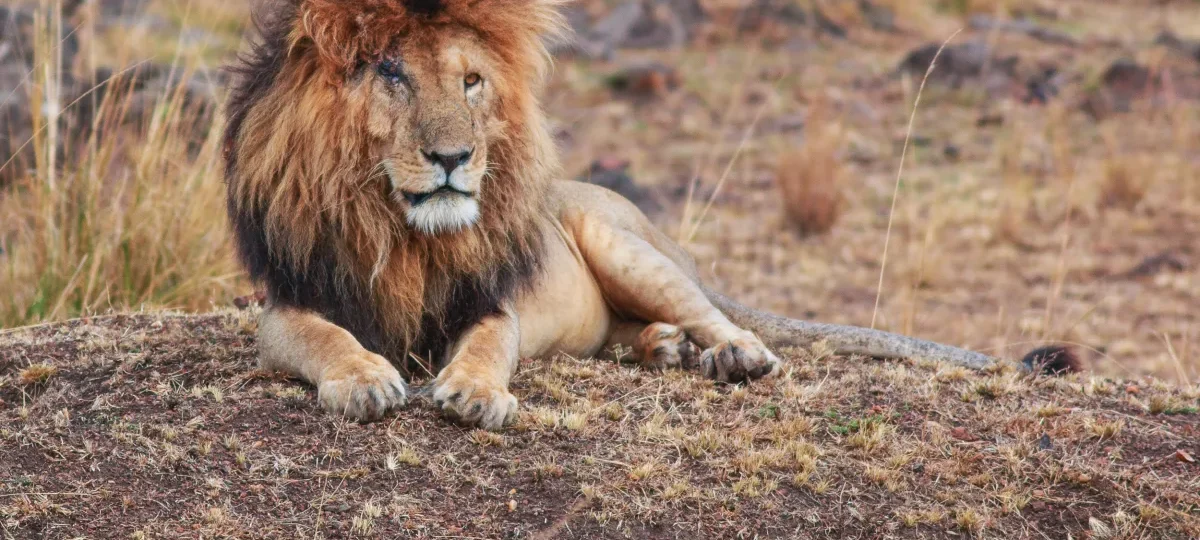
Scarface: The Legendary Lion of the Maasai Mara
Remembering Scarface, the Iconic Lion of the Maasai Mara
Few individual lions have become as recognizable to safari enthusiasts around the world as Scarface, the famous male lion of Kenya’s Maasai Mara.
Named for the distinctive scar across his face, Scarface became a familiar sight to photographers, guides, conservationists, and visitors who followed his life in the Mara.
His story illustrates why individual animals can become important ambassadors for wildlife conservation and why Kenya’s Maasai Mara remains one of Africa’s most celebrated safari destinations.
Who Was Scarface?
Scarface was a male lion known for the prominent scar on the right side of his face. He lived in the Maasai Mara ecosystem and became particularly well known through wildlife photography and stories shared by safari guides and visitors.
Over the years, his appearance and behaviour made him relatively easy for experienced guides to identify.
His scar was believed to have resulted from territorial conflicts and the challenges of life as a wild male lion. Like other male lions, Scarface faced competition over territory, access to females, food, and pride dynamics.
A Life in the Maasai Mara
The Maasai Mara provides an important habitat for lions and other wildlife. Its grasslands support large populations of herbivores, which in turn form part of the food web supporting predators.
Scarface’s long life in this environment gave safari visitors the opportunity to observe the changing dynamics of a wild lion over many years.
For photographers, his distinctive facial markings also made him particularly memorable.
Why Scarface Became So Famous
Scarface’s fame grew through photographs, safari reports, documentaries, and social media. Visitors who encountered him often shared images and stories about their experiences.
His recognizable face allowed people who had never visited Kenya to become familiar with an individual wild animal.
This is one of the fascinating aspects of modern wildlife tourism: a single animal can become a symbol of a much larger ecosystem.
Scarface’s Legacy
Scarface died in June 2021 at an estimated age of around 14 years. His death was widely reported by wildlife organizations and safari communities.
His story continues to be remembered by people who visited the Maasai Mara and by wildlife enthusiasts around the world.
Rather than simply being remembered as a famous lion, Scarface represents the enduring connection between wildlife, photography, tourism, and conservation.
The Maasai Mara After Scarface
Although Scarface is no longer roaming the Mara, the ecosystem continues to support generations of lions and other wildlife.
Visitors today can still experience remarkable lion sightings across the Maasai Mara while exploring one of Kenya’s most important wildlife areas.
Every safari encounter is different—and while another lion may never have exactly Scarface’s distinctive appearance and history, the Mara continues to create new wildlife stories every day.
A Lion Never Forgotten
Scarface’s story lives on in the photographs, memories, and safari experiences of those who encountered him. His distinctive face became a symbol of the wild spirit of the Maasai Mara.
Visit the Mara. Witness the wild. Discover your own African story.
3 Comments
This is exactly what i was looking for, thank you so much for these tutorials
It would be great to try this theme for my businesses
What a nice article. It keeps me reading more and more!